
VPN for Remote Work in the US: A Practical Security Guide (2026)
Quick answer: A VPN helps US remote workers encrypt home/public Wi-Fi traffic and reduce ISP tracking — but only if you enable a kill switch and regularly test for DNS leaks and WebRTC/IPv6 leaks.
Remote work is awesome… until your connection drops mid-call or your laptop quietly leaks DNS outside the tunnel. This guide is built like a checklist: choose the right protocol, turn on the right settings, run the right tests, and fix the usual “why is this acting weird?” issues on Windows, Mac, iPhone, Android, and routers.

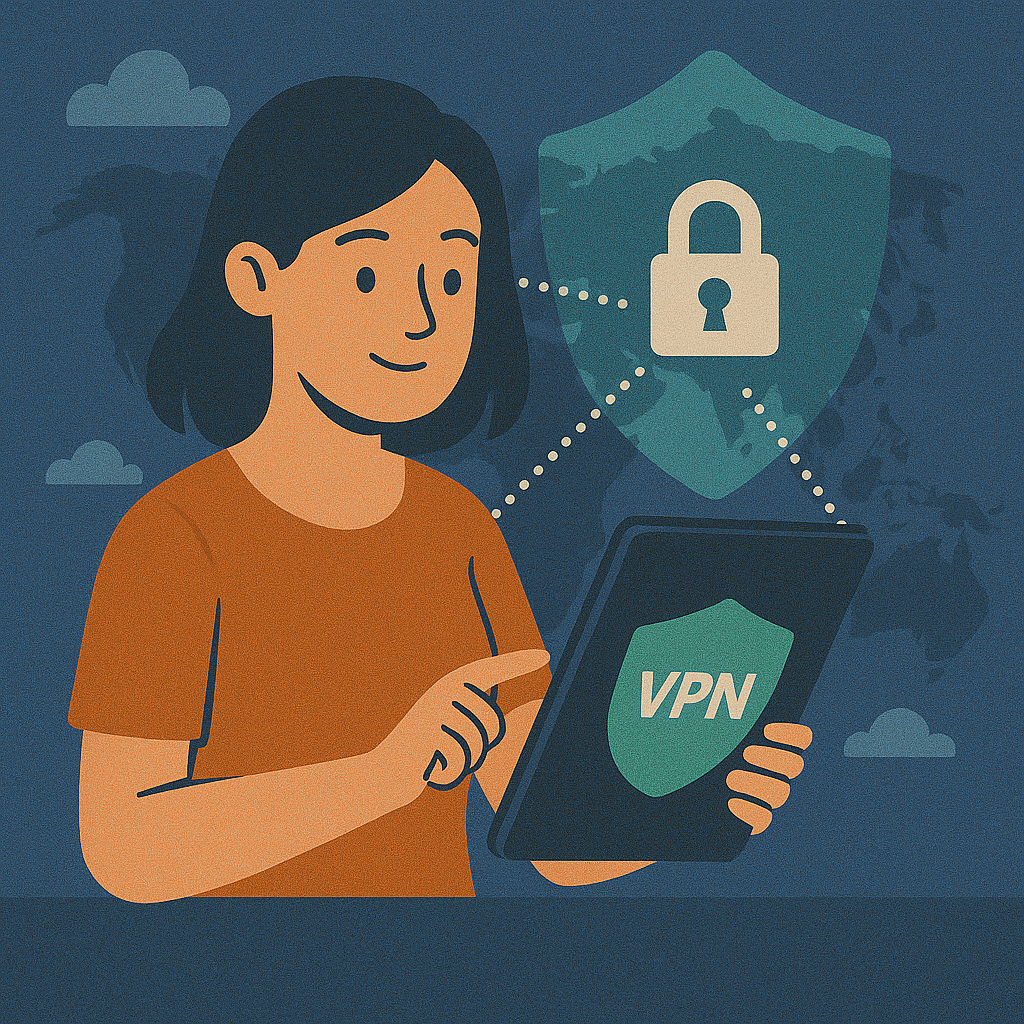
Quick answer + what a VPN can’t do
A VPN encrypts your internet traffic and routes it through a VPN server, which helps protect remote-work sessions on home Wi-Fi and reduces ISP visibility into what you do online. In plain terms: it’s harder for people on the same network to snoop, and your real IP is masked from most sites.
What a VPN doesn’t do: it won’t stop malware by itself, it won’t magically make you anonymous, and it won’t override tracking done through logins or browser fingerprinting. If you’re logged into the same work Google account everywhere, you’re not invisible — you’re just encrypted in transit.
| Remote-work risk | Does a VPN help? | What else you need |
|---|---|---|
| Public Wi-Fi snooping (coffee shop, hotel) | Yes — encrypts traffic | Wi-Fi security basics + avoid unknown networks |
| ISP visibility / profiling | Partly — ISP sees VPN usage, not destinations | Use secure DNS, keep apps updated |
| Account tracking (logins, cookies) | No — VPN doesn’t remove identifiers | Browser hygiene + separate work/personal profiles |
| VPN disconnect exposing your IP | Only if kill switch is enabled | Enable kill switch + auto-reconnect |
| DNS/WebRTC/IPv6 leaks | Depends on configuration | Run leak tests regularly |
Diagram: how a VPN protects remote work traffic
This is the “happy path”: device → encrypted tunnel → internet/apps. Your job is to keep it from silently falling back to your real connection.
Why US remote workers use a VPN in 2026
US remote work is a mix of home networks, coworking spaces, hotels, airports, and “I’ll just take this call from my phone” moments. That’s exactly where VPNs help: they reduce exposure to insecure Wi-Fi, and they add a privacy layer between your household network and the broader internet.
Also, real life happens: you switch between Wi-Fi and mobile data, you roam between access points, you run Zoom/Teams while your OS updates in the background. A good VPN setup keeps that chaos from turning into accidental data exposure. Not glamorous, but very effective.
| Scenario | Risk | Recommended VPN setup |
|---|---|---|
| Home office (shared Wi-Fi) | Weak router security, IoT noise, shared devices | Use modern protocol + optimal settings + update router |
| Coffee shop / hotel Wi-Fi | Man-in-the-middle attempts, fake hotspots | Auto-connect + kill switch + block risky networks |
| Travel work (airports) | Untrusted networks, captive portals, throttling | Travel-ready setup + quick reconnect |
| Router-level VPN at home | Some devices bypass VPN, split networks | Router setup + verify all subnets |
Corporate VPN vs personal VPN (don’t mix them blindly)
This is the question remote workers actually have: “My company already uses a VPN — do I still need one?” In many jobs, your employer’s corporate VPN is for accessing internal services (file shares, intranet, HR tools, admin panels). A personal VPN is for your privacy and safer browsing on home/public networks.
- Use your corporate VPN for work tasks that require it (company resources, internal apps).
- Use a personal VPN for personal browsing, travel Wi-Fi, and reducing ISP visibility when appropriate.
- Avoid stacking VPNs (running both at once) unless IT approves. It can break routes, DNS, and access controls.
How to test your VPN for DNS, IPv6, and WebRTC leaks
Here’s the no-nonsense approach: if your VPN leaks DNS or your real IP, your remote-work privacy story collapses fast. Leak testing is quick, and it’s one of the highest-ROI habits you can build.
| Leak type | What it exposes | Common fix |
|---|---|---|
| DNS leak | Domains you visit (via ISP DNS) | Enable DNS leak protection; use provider DNS; retest |
| IPv6 leak | Your real IPv6 address | Use IPv6-capable VPN or disable/block IPv6 |
| WebRTC leak | Your real IP via browser APIs | Disable WebRTC or limit it; use hardened browser profile |
- Connect the VPN and verify it shows “connected”. Pick a nearby US server for stable calls.
- Run a DNS leak test and confirm you don’t see your home ISP DNS resolvers.
- Run an IPv6 test to ensure your real IPv6 isn’t exposed.
- Run a WebRTC test in your browser and confirm the public IP matches the VPN.
- Enable kill switch and re-test after reconnecting.
Diagram: leak paths that can bypass your VPN tunnel
If you only “connect and forget,” leaks can sneak in via DNS, IPv6, or browser features. Testing keeps you honest.
Fixes by platform (Windows, Mac, iPhone, Android, routers)
Remote work fails in very specific, very annoying ways: the VPN reconnects but DNS stays “sticky,” the laptop sleeps and the tunnel dies, or your phone’s battery saver quietly kills the VPN app. Here’s what usually fixes it.
| Platform | Typical issue | Fix that actually works |
|---|---|---|
| Windows | DNS leaks, IPv6 leaks, traffic escaping on reconnect | Enable kill switch; set provider DNS; consider disabling IPv6; verify in Windows setup |
| macOS | Sleep/wake dropouts, split routing oddities | Enable auto-reconnect; prefer stable protocol; update macOS + VPN app |
| iPhone (iOS) | Disconnects in background, captive portals | Use official app; enable “Connect on Demand” where available; re-check after Wi-Fi changes |
| Android | Battery optimization kills VPN, apps bypass tunnel | Disable battery optimization for VPN app; use Always-on VPN; consider split tunneling only if you understand it |
| Router | Some devices bypass VPN, IPv6 leaks, slow throughput | Use supported firmware; verify routing; consider faster hardware; follow router setup |
Troubleshooting checklist (fast triage)
- Confirm your VPN is actually connected (not “paused” or stuck reconnecting).
- Check your public IP and confirm it matches the VPN location.
- Run DNS/IPv6/WebRTC tests (especially after a network change).
- Enable kill switch and “auto-connect on untrusted Wi-Fi.”
- Switch protocol if calls stutter (WireGuard-style for speed, OpenVPN for compatibility).
- Try a closer server to reduce latency for video calls.
- Update the app and OS (boring, yes, but it fixes real issues).
- For routers: verify all traffic routes through the tunnel (no “guest network” bypass).
| Problem | Likely cause | Quick fix |
|---|---|---|
| Zoom/Teams lag | Distant server, high latency, congested node | Choose a closer server; try WireGuard; run a speed test |
| VPN drops on sleep | Power saving / background restrictions | Enable auto-reconnect; adjust battery/power settings |
| DNS leak detected | DNS not routed via VPN | Enable leak protection; set provider DNS; retest |
| Some apps ignore VPN | Split tunneling or OS behavior | Disable split tunneling; verify Always-on VPN (mobile) |
FAQ
- Do I need a VPN for remote work in the US?
- It’s a strong baseline for encrypting traffic on home/public networks and reducing ISP visibility. For workplace access, follow your company policy and use corporate tools if required.
- Corporate VPN vs personal VPN: what’s the difference?
- Corporate VPN is mainly for accessing internal company resources. Personal VPN is for your privacy and safer browsing on home/public networks. Avoid stacking them unless IT approves.
- Which protocol is best for video calls?
- WireGuard-style protocols tend to be fastest and lowest-latency. If you’re in a restrictive network, OpenVPN can be more compatible. Avoid outdated protocols.
- Does a VPN stop websites from tracking me?
- No. A VPN hides your IP and encrypts the connection, but cookies, logins, and browser fingerprinting can still track you.
- What’s the single most important setting for remote work?
- Enable a kill switch. Without it, a short disconnect can expose your real IP during work sessions.
- Are free VPNs OK for remote work?
- Usually not. Remote work needs stability, clean leak tests, and predictable performance. If budget is tight, read free VPN trade-offs and compare with paid options.
Conclusion
For US remote workers, a VPN is a practical security layer: it encrypts traffic on sketchy networks, reduces ISP visibility, and helps keep your work sessions from leaking data when you switch networks. But it’s not magic — you still need safe browsing, OS updates, and a clean setup.
If you want the “boring but unbeatable” setup: pick a reputable provider, enable kill switch, run leak tests once, and then re-check after major updates or network changes. Do that and you’ll avoid 90% of the facepalm moments.
Short video: VPN privacy explained in plain English
Key takeaway: the main job of a VPN is to separate who you are (your IP, ISP) from what you do (sites you access). A proper no-logs approach helps stop that bridge from being rebuilt later.
- What a VPN hides: your traffic on local networks and most ISP-level visibility.
- What it doesn’t hide: logins, cookies, and browser fingerprinting.
- What to do next: enable kill switch and run leak tests after reconnects.
If the player doesn’t load, watch on YouTube: https://www.youtube.com/watch?v=rzcAKFaZvhE.
About the author
Denys Shchur is the creator of VPN World, focusing on practical, test-driven guides about VPNs, online privacy and secure remote work. He spends far too much time running speed tests and checking for DNS leaks, so you don’t have to.
Recommended VPN
Affiliate links (nofollow/sponsored).
Disclosure: VPN World may earn a commission if you subscribe via these links — without changing your price.